What should a homeowner do when a billiard room swings between humid summers and dry winters?
Slate is indifferent to weather, but the frame, rails, cloth and leather around it are not. A practical approach to holding a stable climate in the room where your table lives.
What Moves When the Room Turns Damp or Dries Out
The slate itself is essentially indifferent. Stone does not take on moisture from the air in any way you will ever feel through a cue. Everything built around the slate does. Wood exchanges moisture with the air until the two reach equilibrium, and it does most of its moving across the grain rather than along it. On a billiard table that means the longest, widest parts show it first: rails that develop a hairline at a mitered pocket corner, a cabinet panel that shrinks slightly within its frame, a finish that checks across a broad apron. None of it happens in a week. It happens over years of cycling, and repeated cycling stresses glue joints far more than one dry season ever would. Related: How do you select an heirloom pool table that lasts for several generations?
The playing surface has its own reactions. Billiard cloth is wool, or wool blended with nylon, and wool is hygroscopic by nature. In a damp room the cloth takes on moisture, plays slower and heavier, and can relax enough to show slack near the pockets. Leather pockets, shields and rail caps go the other way in a dry winter, stiffening and eventually cracking along their fold lines. Cushion rubber is more sensitive to heat and sunlight than to humidity, which is why a table parked beside a radiator, a wood stove or a south facing window ages differently from an identical table twelve feet away. In a cold basement during a humid August, you can even find condensation forming on the underside of the slate frame. Related: What slate thickness truly matters when buying a premium billiard table for home?
Keep reading: How do you select an heirloom pool table that lasts for several generations?, What slate thickness truly matters when buying a premium billiard table for home?, Which hardwoods age most gracefully in a fine heirloom quality billiard table?. See how Billiardr helps you a craftsman guide to heirloom pool and billiard tables.
Choosing a Target Range and Measuring It Honestly
A comfortable band for a room full of furniture grade wood is typically somewhere between forty and fifty five percent relative humidity at normal living temperatures, which happens to be the same range that suits people and pianos. Stability matters more than hitting a particular figure. A room that drifts slowly from the low forties in February to the low fifties in August treats the joinery far more kindly than one that swings ten points in a single week every time the weather turns. If your house cannot realistically hold forty five percent all year, aim instead to flatten the peaks and troughs and accept a gentle seasonal drift. Related: Why does room size dictate the ideal billiard table dimensions for comfortable play?
Measure where the table lives, not at the hallway thermostat. Basements run cooler and damper than the rest of the house in summer, and a room over a garage can be drier and swingier than the floor below it. Inexpensive digital hygrometers drift over time, so keep two in different corners and treat agreement between them as your confidence check. If you want a reference point, a saturated table salt solution sealed in a container reads close to seventy five percent, which is enough to tell you whether a meter has wandered badly. Log readings across a full twelve months before you spend anything on equipment. Most people discover their real problem is one season, not the whole year.
Equipment for Damp Summers and Dry Winters
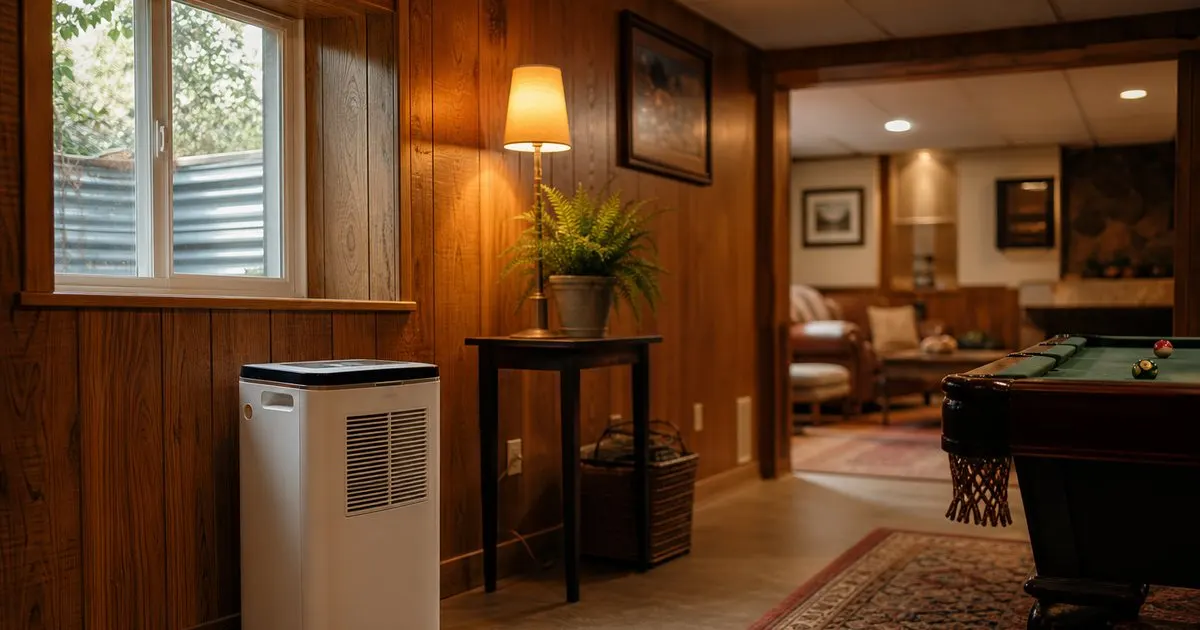
For a damp basement, a dehumidifier sized to the actual volume of the room is the workhorse, but plumb it to a floor drain or a condensate pump rather than emptying a tank by hand, because the unit that shuts off on a full reservoir while you are away is the one that lets the room spike. A setting around forty five to fifty percent is usually enough. Before buying a larger machine, deal with the causes: air seal and insulate the rim joists, insulate cold water lines that sweat, and fix grading and gutters that push groundwater against the foundation. Also avoid over cooling the space with air conditioning in summer, since chilling the surfaces below the dew point invites condensation rather than preventing it.
For a dry winter, forced air heat can pull a room well below thirty percent for months. A humidifier mounted on the furnace serves the whole house and needs no daily attention; a large evaporative unit in the room works too, provided you actually clean it. Skip ultrasonic misters near the table, because the fine mineral dust they scatter settles into wool cloth and is miserable to remove. Placement is free and matters as much as machinery. Keep the table several feet clear of supply registers, fireplaces and stoves, deflect or close a register that blows straight at a rail, and hang solar shades on windows that put direct sun across the finish and cloth. Related: Which hardwoods age most gracefully in a fine heirloom quality billiard table?
A Seasonal Routine That Keeps the Table Playing True
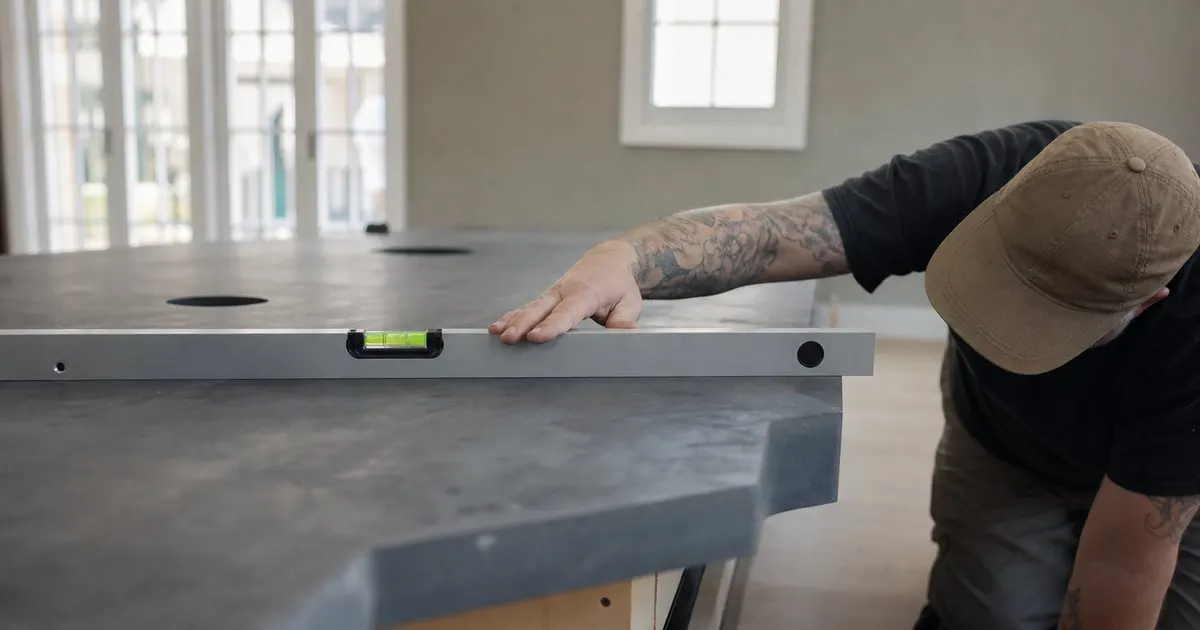
Twice a year, at the start of the heating season and again when the humid months arrive, give the table twenty minutes. Check level at several points across the bed with a long precision level rather than a short one, since a short level can sit happily inside a shallow dip. Test the rail bolts and bring any that have loosened back to snug by hand, without wrenching them tight, because over torqued bolts distort rails and crush the wood around the inserts. Brush the cloth in one direction, vacuum the pockets, and run a fingertip along the slate seams to feel for anything that has opened. Wipe the woodwork with a barely damp cloth, and check with your maker before applying any wax, since a modern conversion varnish or an oiled finish wants different treatment from traditional lacquer.
Between those checks, a few habits carry the rest. Cover the table when the room will sit unused for weeks, but only when the room is stable, because a cover over a damp table traps the moisture against the cloth instead of letting it go. Keep cues in the same conditioned room, stored vertically or lying flat, never in a garage or an unheated porch. If you close the house seasonally, leave the heating and cooling running at a setback temperature rather than switching it off, since an empty house is exactly where the wide swings happen. Write the routine down and keep it with the table's paperwork, so the next owner inherits the method along with the furniture.
- The slate does not care about humidity, but the rails, cabinet, cloth and leather all do, and repeated swings do more harm than one dry or damp season.
- Aim for roughly forty to fifty five percent relative humidity measured in the room itself, and prioritize stability over hitting an exact number.
- Drain the dehumidifier rather than emptying a tank, fix the moisture source before buying a bigger machine, and avoid ultrasonic misters near billiard cloth.
- Check level, rail bolts, seams and cloth twice a year, and keep the table clear of registers, fireplaces and direct sun.

Julien Jimenez
Julien Jimenez is an independent software builder based in Paris. He designs, ships, and operates focused SaaS products for small businesses and independent professionals. Read the full author page.
A Table Built to Be Inherited
A craftsman guide to heirloom pool and billiard tables. Billiardr is built to help you put this into practice.
Find your tableMore from the Billiardr blog
How do you select an heirloom pool table that lasts for several generations?
What slate thickness truly matters when buying a premium billiard table for home?
Which hardwoods age most gracefully in a fine heirloom quality billiard table?
Get the complete heirloom pool and billiard tables guide
Our full buying guide, the price guide, and new research as we publish it. One email, no spam, unsubscribe any time.