How do you know whether an upstairs floor can safely support a slate billiard table?
A slate table is the heaviest object most homes will ever hold, and it delivers that weight through a handful of small leg pads. Here is how to read the structure underneath before delivery day.
The Load a Slate Table Actually Places on a Floor
Start with an honest number rather than a guess. An eight foot table with a three piece slate bed typically lands somewhere between roughly seven hundred and nine hundred pounds once assembled, and a nine foot table with thicker slate and a heavy hardwood frame often passes a thousand. Add a set of balls, a rack, a cue stand, and two or three adults leaning hard on the rails during a break shot, and the working load in that corner of the room is meaningfully higher than anything else the space was designed to hold. Ask the maker or dealer for the assembled weight of your exact configuration, not a catalog average, because slate thickness and cabinet construction swing that figure considerably. Related: How do you select an heirloom pool table that lasts for several generations?
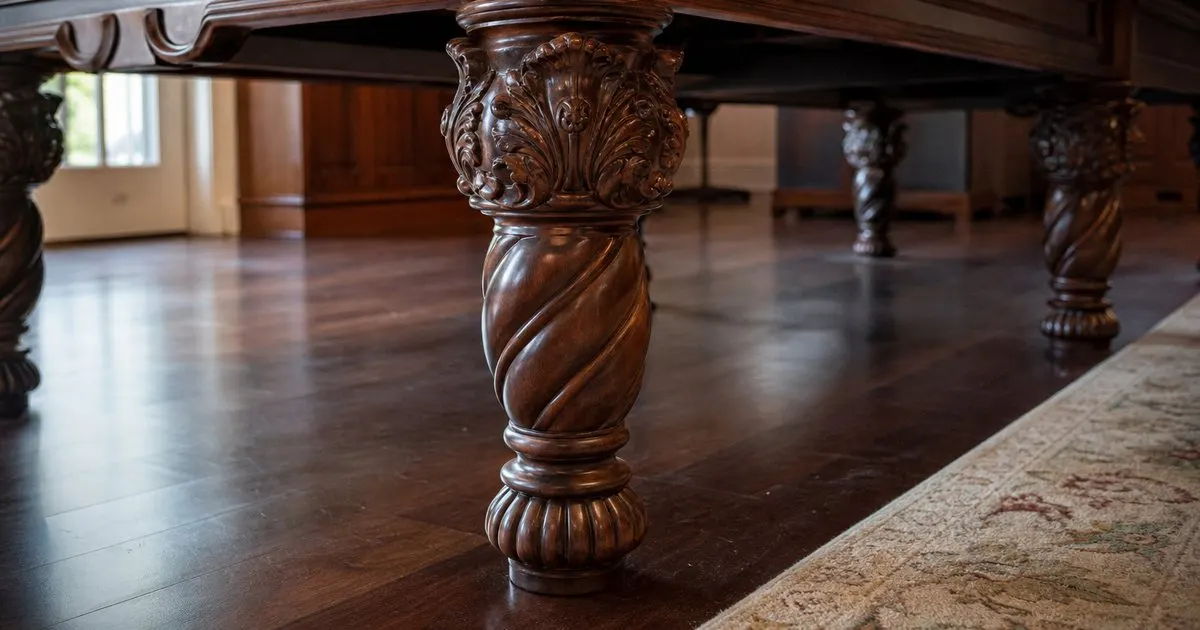
The number that matters more, though, is how the weight arrives. A billiard table does not press evenly across its footprint the way a full bookcase or a waterbed does. It funnels everything through four legs, or six on many nine foot and antique tables, and each leg meets the floor across a contact patch not much larger than a dinner plate. Averaged across the table's plan area the pounds per square foot look reassuring. Concentrated under a leg standing in the middle of a joist bay, they are a different question entirely. That distinction, distributed load against point load, is the one a builder or engineer will ask about first. Related: What slate thickness truly matters when buying a premium billiard table for home?
Keep reading: How do you select an heirloom pool table that lasts for several generations?, What slate thickness truly matters when buying a premium billiard table for home?, Which hardwoods age most gracefully in a fine heirloom quality billiard table?. See how Billiardr helps you a craftsman guide to heirloom pool and billiard tables.
Reading the Structure Beneath the Room
A ground floor room on a concrete slab is the simple case, and most finished basements fall here. Slabs on grade carry this kind of weight without discussion, and the only real cautions are radiant heat tubing you must not drill into and a slab that has cracked or heaved. Everything above a crawlspace or a basement is a suspended floor, and there the variables multiply: joist species and depth, spacing, clear span, condition, and whether anything below carries the middle of that span. Orientation matters too. Setting the table so its long axis runs across the joists spreads the legs over many members, while running it parallel can land two or three legs on the same one. Related: Why does room size dictate the ideal billiard table dimensions for comfortable play?
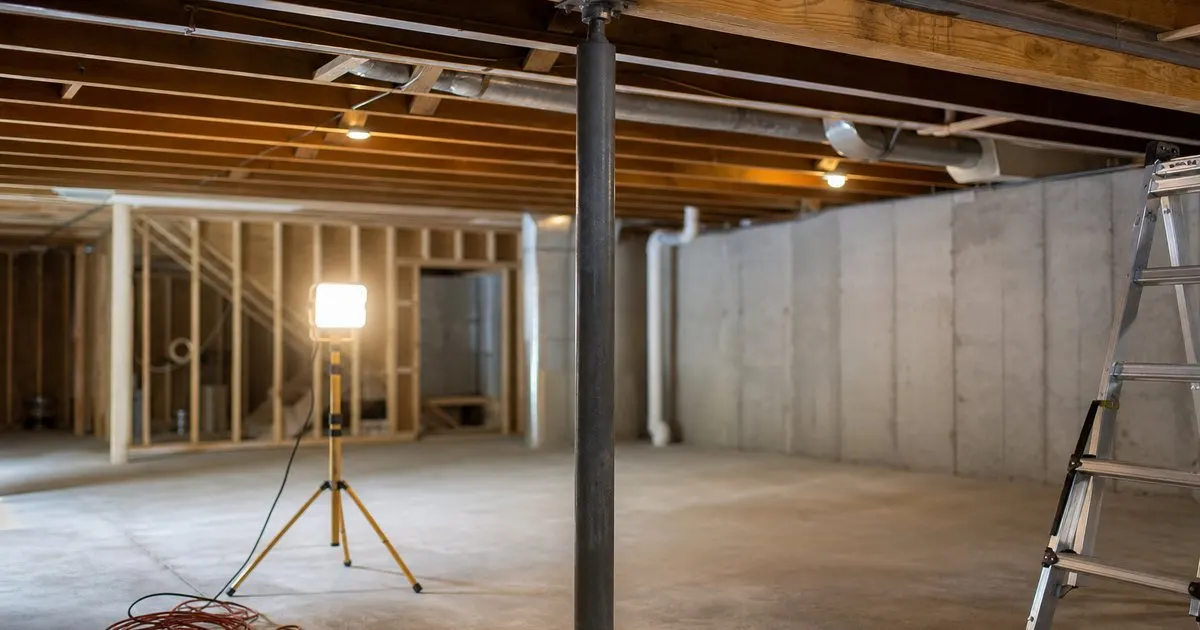
Look from below wherever you can. Note the joist depth, whether there is a beam at mid span, whether the posts under that beam sit on real footings or simply on the slab, and whether any joist has been notched or drilled by a plumber. In older houses, full dimension lumber is often stiffer than it looks; in newer ones, engineered joists are strong but designed to tight deflection targets that assume ordinary furniture. The worst cases are rooms built over garages and bonus rooms above open living spaces, where a long clear span carries no interior bearing wall at all. If the ceiling below is finished and you cannot see anything, you are guessing, and guessing is the wrong method for a load like this.
When to Bring In a Structural Engineer, and What to Ask
Call one for any suspended floor, any room above the ground level, any room over a garage, any older house that has been remodeled in ways nobody documented, and any condominium or association property with rules about structural alterations. A few hours of a licensed residential structural engineer's time is a small fraction of what an heirloom table costs, and the written opinion is also the document your insurer and, later, your buyer will want to see. Builders and installers offer opinions freely and often correctly, but an opinion is not an assessment, and delivery crews are not qualified to sign off on framing. Related: Which hardwoods age most gracefully in a fine heirloom quality billiard table?
Give the engineer three things: the assembled weight from the maker, a drawing or photograph showing the leg layout and footprint, and the exact spot in the room where you intend to place the table. Then ask specific questions. Is the concern capacity or deflection under sustained load? Would sistering the joists, adding solid blocking between them, or setting a beam and adjustable post below be the cleaner remedy? Does the delivery route matter, given that individual slate sections commonly weigh well over a hundred pounds each and travel through the house on two sets of hands? Ask for the answer in writing, with the recommended fix described plainly enough for a contractor to price.
Spreading the Load and Holding Level for Decades
Most remedies are unglamorous and effective. Move the table so it runs across the joists instead of along them, and shift it toward a bearing wall rather than the center of the longest span. Add solid blocking between joists under the leg lines so the load shares across neighbors. Sister the joists with matching lumber glued and fastened along their length. Where headroom below allows, a beam and a properly footed adjustable post is the most decisive fix of all. A sheet of plywood under the table helps spread a point load a little, but it does nothing for a span that is simply too long, so treat it as a finishing touch rather than a solution. On thick carpet or a floating floor, hard leg pads keep the legs from slowly settling into the underlayment.
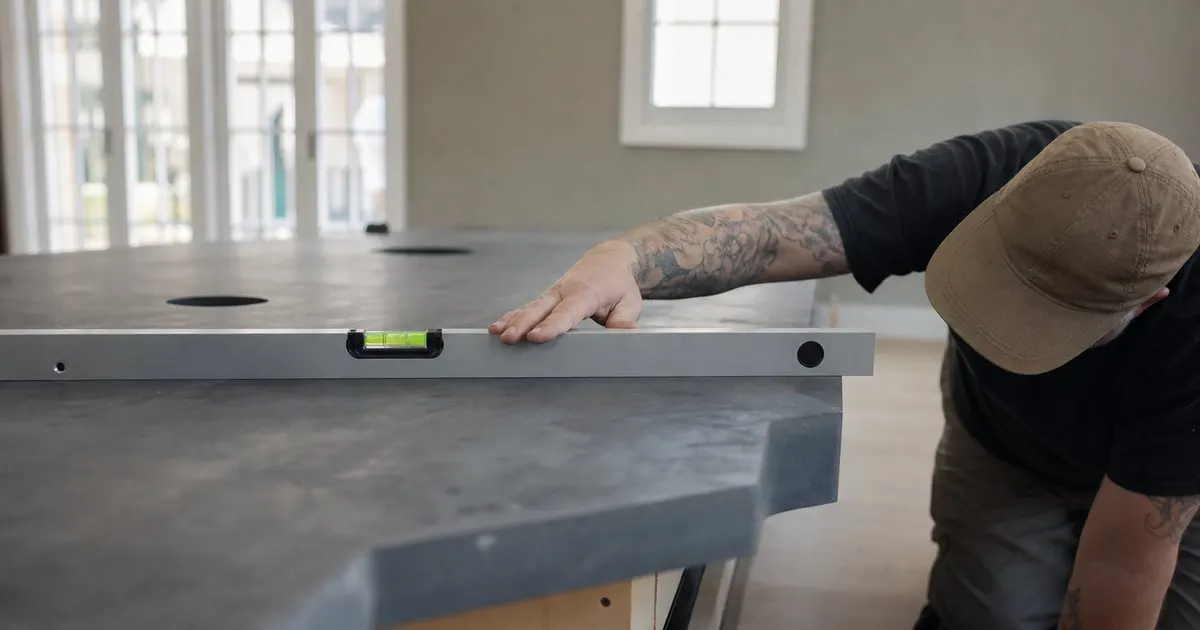
Understand the real failure mode, because it is almost never dramatic. Floors in this situation rarely collapse. They deflect, quietly and permanently, by a fraction of an inch that no one notices in the room but that the slate reports faithfully: seams that open, balls that drift toward one rail, a table that will not hold a level through the year. Plan on a professional releveling within the first year after delivery, and again after any structural work below. Keep a long precision level in the room, check it seasonally, and choose an installer who expects to come back rather than one who considers the job finished when the truck pulls away.
- Ask the maker for the assembled weight of your exact table, then treat it as a point load through four small leg pads, or six on many nine foot and antique tables, rather than an evenly spread one.
- A slab on grade is a non issue; every suspended floor, and especially a room above a garage, deserves a look at joist depth, span, direction and what supports the middle.
- Run the table across the joists and near a bearing wall, and use blocking, sistered joists or a beam and post below rather than relying on a sheet of plywood.
- The usual outcome of an under built floor is not collapse but slow deflection that keeps the table out of level, so budget for a follow up releveling.

Julien Jimenez
Julien Jimenez is an independent software builder based in Paris. He designs, ships, and operates focused SaaS products for small businesses and independent professionals. Read the full author page.
A Table Built to Be Inherited
A craftsman guide to heirloom pool and billiard tables. Billiardr is built to help you put this into practice.
Find your tableMore from the Billiardr blog

How do you select an heirloom pool table that lasts for several generations?
What slate thickness truly matters when buying a premium billiard table for home?
Which hardwoods age most gracefully in a fine heirloom quality billiard table?
Get the complete heirloom pool and billiard tables guide
Our full buying guide, the price guide, and new research as we publish it. One email, no spam, unsubscribe any time.