Which pocket and leather details separate a fine billiard table from an ordinary one?
Pockets are where craftsmanship is easiest to see and most often skipped. Here is how to read leather, irons, facings, and rail sights the way a table mechanic does.
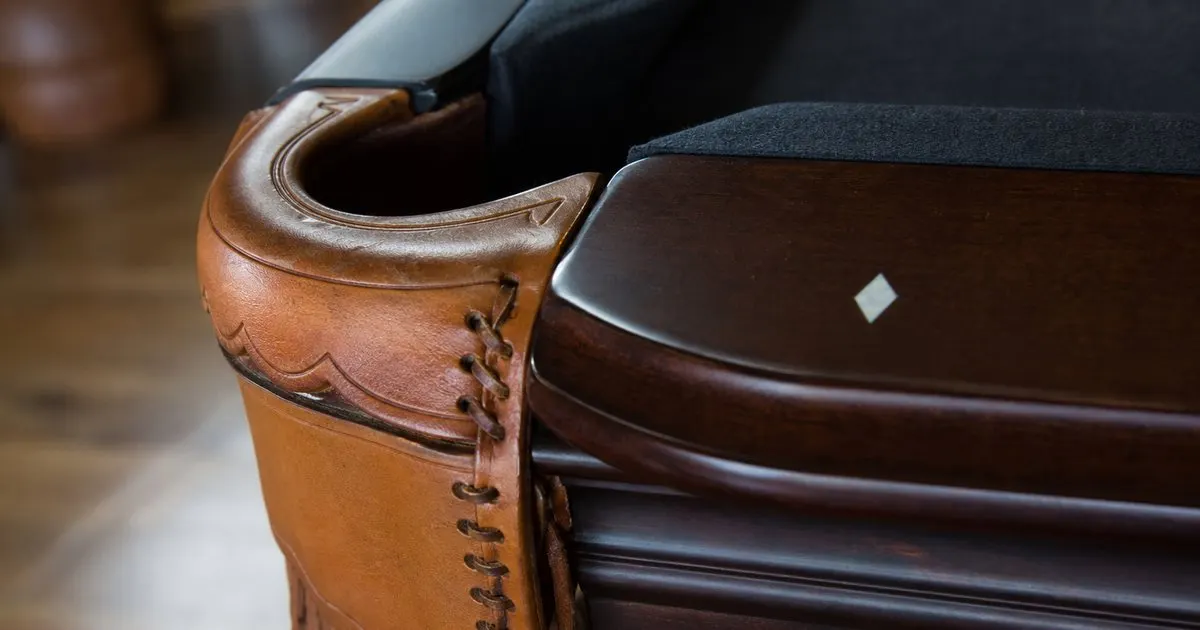
Drop pockets versus ball returns
Heirloom tables almost universally use drop pockets, where a pocketed ball simply rests in a leather or fabric basket beneath the rail until it is retrieved. The alternative, a ball return that channels balls through the frame to a collection box at one end, belongs to the commercial and coin-operated tradition. Ball returns add mechanism, noise, and a large opening in the apron, and they require the frame to be designed around the track rather than around strength and beauty. For a table that will be looked at as much as played, drop pockets are the honest choice. Related: How do you select an heirloom pool table that lasts for several generations?
The pocket itself hangs from a casting, usually called a pocket iron, that bolts to the rail ends and to the slate. On a fine table those irons are substantial, sit flush and level with the rail tops, and are finished to match the table's hardware rather than left as raw plated metal. The leather or shield is then attached to the iron. Lift one gently and feel its weight; a good pocket has a satisfying heft and does not flex or rattle. Check that the pocket bottom is lined with leather or thick felt so a dropped ball lands with a soft note rather than a clatter. Related: What slate thickness truly matters when buying a premium billiard table for home?
Keep reading: How do you select an heirloom pool table that lasts for several generations?, What slate thickness truly matters when buying a premium billiard table for home?, Which hardwoods age most gracefully in a fine heirloom quality billiard table?. See how Billiardr helps you a craftsman guide to heirloom pool and billiard tables.
Reading the leather
Full-grain leather, either hand-laced to the iron or cleanly stitched with heavy waxed thread, is the mark of a serious maker. The two classic styles are the shield pocket, a broad panel of leather that wraps the iron, and the fringed or tasseled pocket that recalls nineteenth-century tables. Both age beautifully, darkening and softening with handling in the same way a fine saddle does. Vinyl and molded plastic pockets, by contrast, never change except to crack, and their presence on an otherwise expensive table tells you where the budget was cut.
Inspect the lacing and stitching for even spacing and tight tension, and check how the leather meets the iron; sag or gaps mean it was fitted loosely and will only loosen further. Ask what happens when a pocket eventually wears, because a well-made table lets the pockets be removed and releathered without disturbing the rails. Colors typically follow the room and the cloth: natural tan against green cloth, dark brown or black against burgundy or slate blue. There is no rule, but matching pocket leather to the table's other leather details, such as a cue rack, reads as intentional.
Pocket geometry and how it plays
Pocket size is a play decision that many buyers never realize they are making. Corner pocket mouths on pool tables typically fall somewhere around four and a half to five inches, with side pockets slightly wider, and serious players tend to favor the tighter end of that range because it rewards precision. Two other measurements shape how a pocket accepts a ball: the angle at which the cushion facings are cut into the pocket, and the depth of the shelf, meaning how far the slate extends into the pocket opening before the ball drops. A deep shelf with steep facings will spit out balls that a shallow, forgiving pocket would swallow. Related: Why does room size dictate the ideal billiard table dimensions for comfortable play?
Rail sights, the diamonds or dots set into the rail tops, are both ornament and instrument. On a fine table they are inlaid in mother of pearl, abalone, brass, or a quality resin rather than printed or glued on, and they are spaced with precision because players use them to calculate kick and bank shots. Count them: three between each pocket on the long rails, and check by eye that they sit dead center in the rail width. Uneven or off-center sights are a quiet confession about the care taken in the rest of the build. Related: Which hardwoods age most gracefully in a fine heirloom quality billiard table?
Inspecting pockets before you buy
Whether you are viewing in a showroom or reviewing photographs of a table under construction, run through the same short list. Are all six pocket mouths the same size, checked with a tape rather than trusted by eye? Are the facings cut cleanly with no torn cloth or visible glue? Do the pocket irons sit flush with the rail tops and level with one another? Is the leather full-grain, tightly laced or stitched, and free of sag? Does a dropped ball land quietly? Can the pockets be removed for service without pulling the rails?
Then ask the maker about sourcing. Where does the leather come from, who does the lacing, and are the irons cast for the maker or bought as generic stock? None of those answers is disqualifying on its own, but a maker who knows them and answers with pride is typically one who cares about the rest of the table in the same way. Pockets are a small fraction of the cost of an heirloom table and a large fraction of what your hands and eyes will touch every time you play, which is exactly why they are worth this much attention.
- Drop pockets on solid, flush-fitting irons are the heirloom standard; ball returns belong to commercial tables.
- Full-grain leather that is hand-laced or heavily stitched ages well; vinyl and plastic only crack.
- Pocket mouth size, facing angle, and shelf depth decide how forgiving the table plays.
- Inlaid, precisely spaced rail sights and uniform pocket openings reveal the care taken in the whole build.

Julien Jimenez
Julien Jimenez is an independent software builder based in Paris. He designs, ships, and operates focused SaaS products for small businesses and independent professionals. Read the full author page.
A Table Built to Be Inherited
A craftsman guide to heirloom pool and billiard tables. Billiardr is built to help you put this into practice.
Find your tableMore from the Billiardr blog
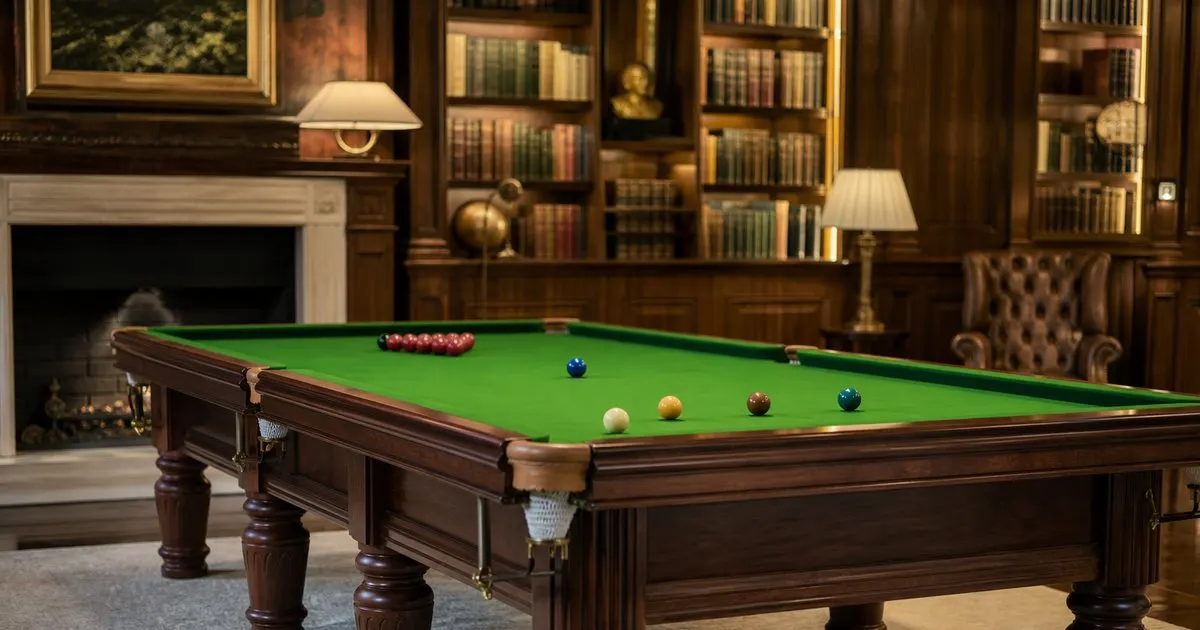
How do you select an heirloom pool table that lasts for several generations?
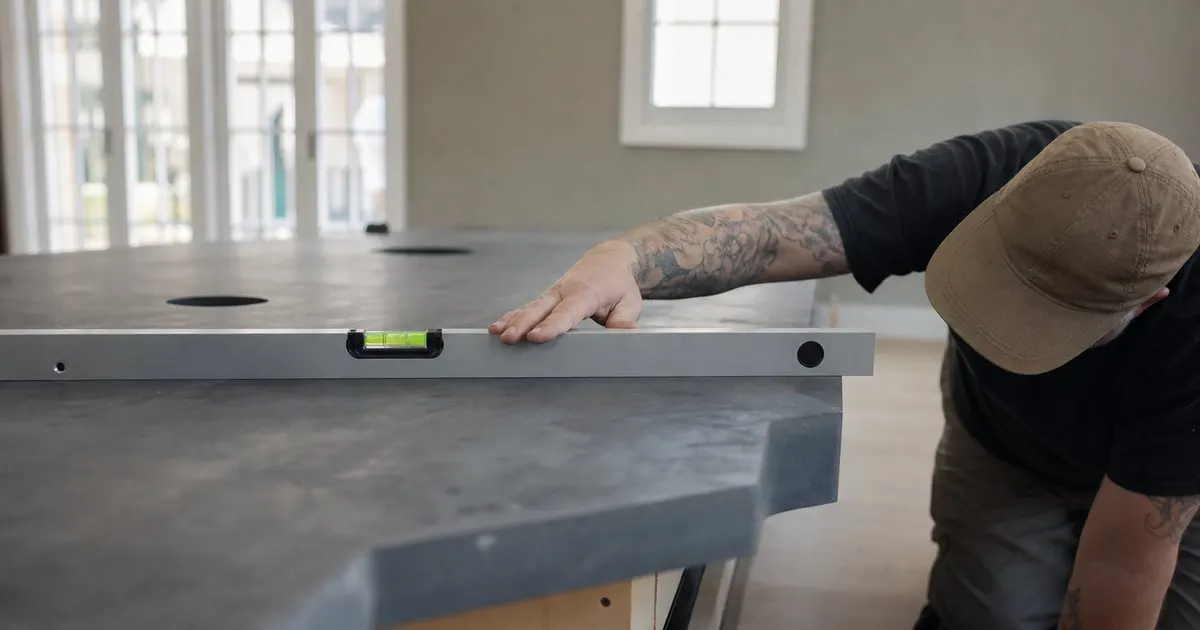
What slate thickness truly matters when buying a premium billiard table for home?
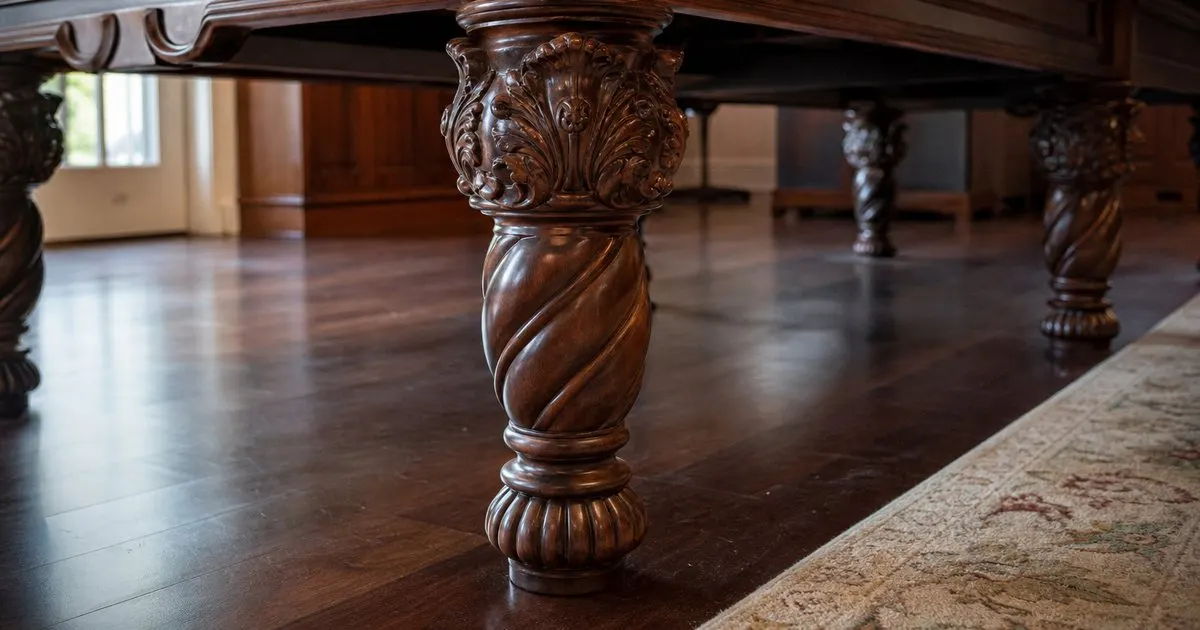
Which hardwoods age most gracefully in a fine heirloom quality billiard table?
Get the complete heirloom pool and billiard tables guide
Our full buying guide, the price guide, and new research as we publish it. One email, no spam, unsubscribe any time.