What is the best way to light an heirloom billiard table for serious play?
Lighting is a playing condition disguised as decor. Height, span, color rendering, and glare control decide whether an exquisite table plays as well as it looks.
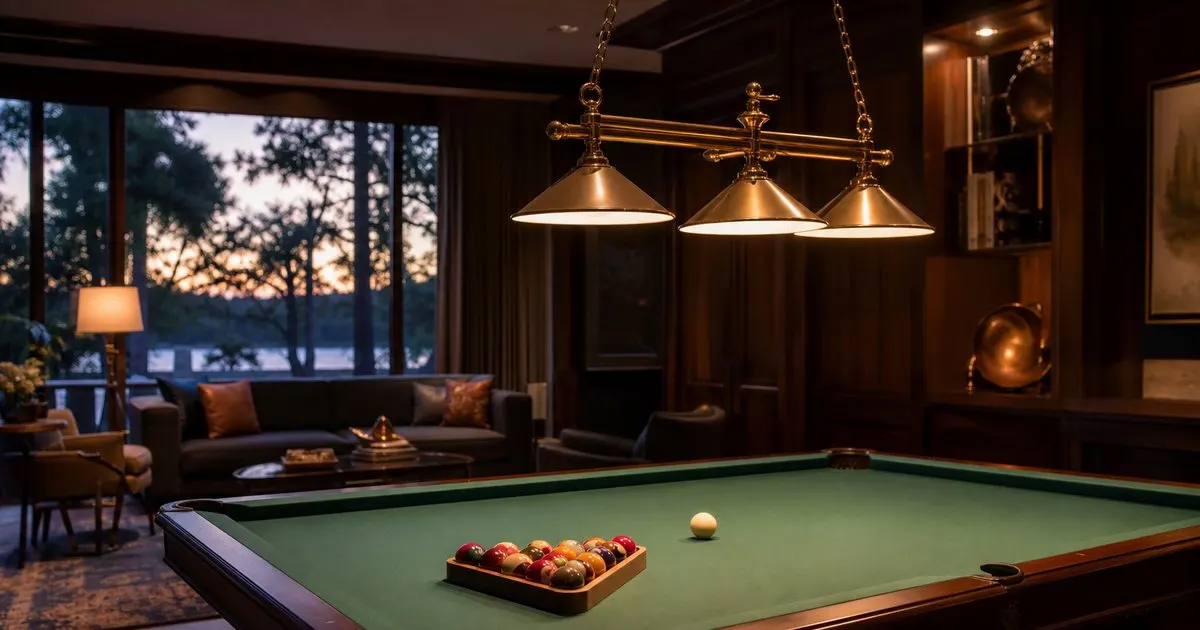
Why table lighting is a playing condition, not decor
Serious players read the table with their eyes before they ever address the cue ball. They judge the exact edge of an object ball, the line to the pocket, the subtle nap of the cloth, and the position of every ball relative to the rails. Uneven light corrupts all of that. A bright patch in the middle of the table and dim corners make long shots feel different from short ones. Multiple light sources cast multiple shadows from every ball, and a shadow that falls across a contact point is a small lie told to the eye at the worst moment.
The goal is simple to state and demanding to achieve: even illumination across the entire playing surface, from rail to rail and pocket to pocket, with each ball casting a single soft shadow directly beneath itself. Everything else in the room, from sconces to picture lights, should be quieter than the table. On an heirloom table this is doubly important, because the same fixture that lights the cloth is also what shows off the rails, the inlay, and the carving. A poorly chosen light diminishes both the game and the object. Related: Which hardwoods age most gracefully in a fine heirloom quality billiard table?
Keep reading: How do you select an heirloom pool table that lasts for several generations?, What slate thickness truly matters when buying a premium billiard table for home?, Which hardwoods age most gracefully in a fine heirloom quality billiard table?. See how Billiardr helps you a craftsman guide to heirloom pool and billiard tables.
Height, span, and placement
Commonly cited guidance for home rooms places the lower edge of the fixture roughly thirty to thirty-six inches above the cloth, which is low enough to keep the light on the table and high enough to stay out of the line of sight of a standing player looking across it. Serious players should also know that the World Pool-Billiard Association's equipment specifications for tournament conditions set the bottom of the fixture no lower than forty inches above the bed of the table, so a room built for match-standard play hangs the light at or above the top of the home range and relies on a fixture wide and bright enough to keep the cloth evenly lit from that height. A useful check is to stand at one end and look at the far rail; if the fixture blocks your view of the opposite pocket, it is too low. If the shades are throwing hard shadows from balls near the rails, it is probably too high or too short. Related: How do you select an heirloom pool table that lasts for several generations?
Span matters as much as height. A single short pendant over the center of a nine-foot table leaves the end rails in relative gloom, so longer tables call for a longer fixture or a multi-shade design that spreads sources along the table's length. Center the fixture over the center of the playing surface, not the center of the room; the two rarely coincide, and every installer has stories of a light hung to the ceiling's geometry rather than the table's. Fix it to structure rather than to drywall, and set it before the table is installed so the mechanic can align the table to the light. Related: What slate thickness truly matters when buying a premium billiard table for home?
Light quality: color, rendering, and glare
Colored balls must read as their true colors, which means choosing lamps with high color rendering. Lower rendering sources can make certain reds, oranges, and purples difficult to distinguish under pressure, especially on the far side of the table. Color temperature is more a matter of room character: warmer light flatters wood and feels like a study, cooler light gives crisper contrast on the cloth. Many players settle on something in the neutral range and let the room's other lighting carry warmth. Whatever you choose, keep all the lamps in the fixture matched, because mixed temperatures over one table are distracting.
Glare is the enemy of accurate aiming. Balls are glossy, and a bare bright source reflects in every one of them as a hard highlight that hides the true edge. Shades, diffusers, and frosted lamps soften that reflection into something the eye can ignore. Put the fixture on a dimmer, both to tune brightness for play and to let the room relax when the table is idle. Avoid ceiling downlights aimed at the table; they create the hot spots and multiple shadows described above, and on a low ceiling they throw light into a player's eyes at the worst angle. Modern low-heat lamps also spare the cloth the drying that older hot sources caused over years. Related: Why does room size dictate the ideal billiard table dimensions for comfortable play?
Fixtures that belong over an heirloom table
The fixture should be chosen with the same care as the table and, ideally, at the same time. Scale is the first consideration: a delicate pendant over a massive carved table looks apologetic, and a heavy iron fixture over a slender contemporary piece feels borrowed from a bar. Materials should speak to the table's hardware. Brass or bronze suits warm woods and leather pockets; blackened steel or nickel pairs with cooler, cleaner designs. Linen and parchment shades diffuse beautifully; stained and leaded glass adds color and history without much effort.
Beyond the main fixture, plan a second layer for the room. Wall sconces, a picture light over a print, or a lamp on a side table give players and spectators somewhere to look between shots and keep the room from feeling like a stage. Put that layer on a separate circuit or dimmer from the table light. Finally, have the conversation with your electrician early. A properly placed ceiling box, adequate support for a heavy fixture, and a switch where the cue rack is are far easier to arrange before the ceiling is closed than after the table has arrived.
- Even light across the whole cloth with a single soft shadow per ball is the goal.
- Hang the fixture roughly thirty to thirty-six inches above the cloth for home play, or at least forty inches for tournament conditions, centered on the table, and long enough to reach the end rails.
- Choose high color-rendering, diffused, matched lamps on a dimmer, and avoid downlights aimed at the table.
- Scale and material of the fixture should match the table, with room lighting on a separate circuit.

Julien Jimenez
Julien Jimenez is an independent software builder based in Paris. He designs, ships, and operates focused SaaS products for small businesses and independent professionals. Read the full author page.
A Table Built to Be Inherited
A craftsman guide to heirloom pool and billiard tables. Billiardr is built to help you put this into practice.
Find your tableMore from the Billiardr blog
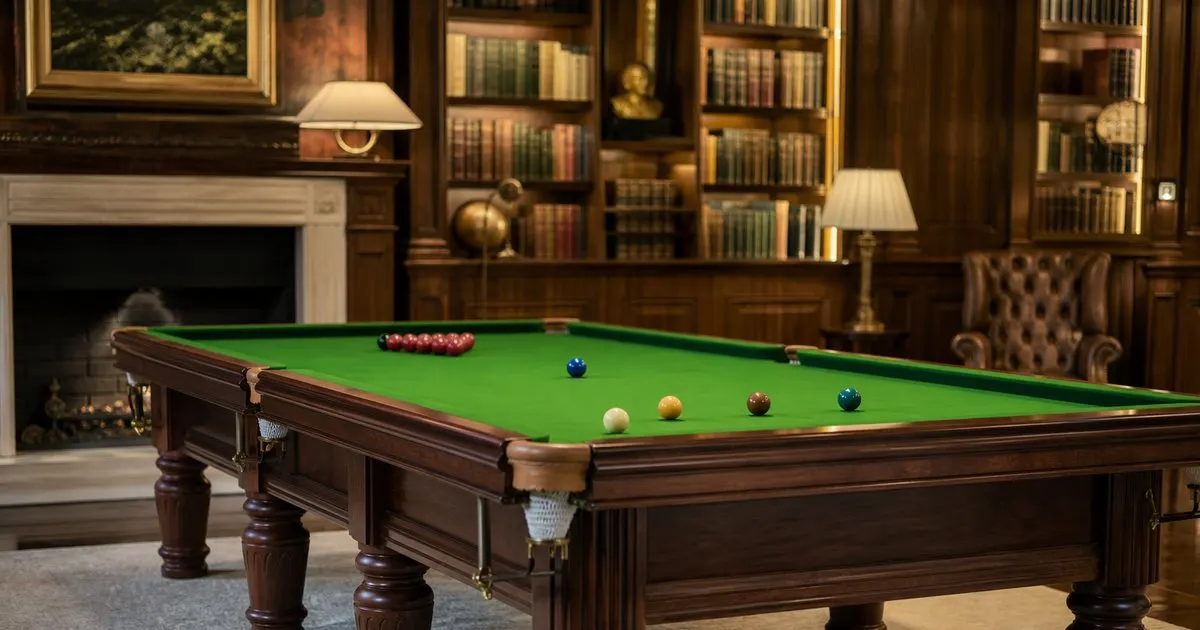
How do you select an heirloom pool table that lasts for several generations?
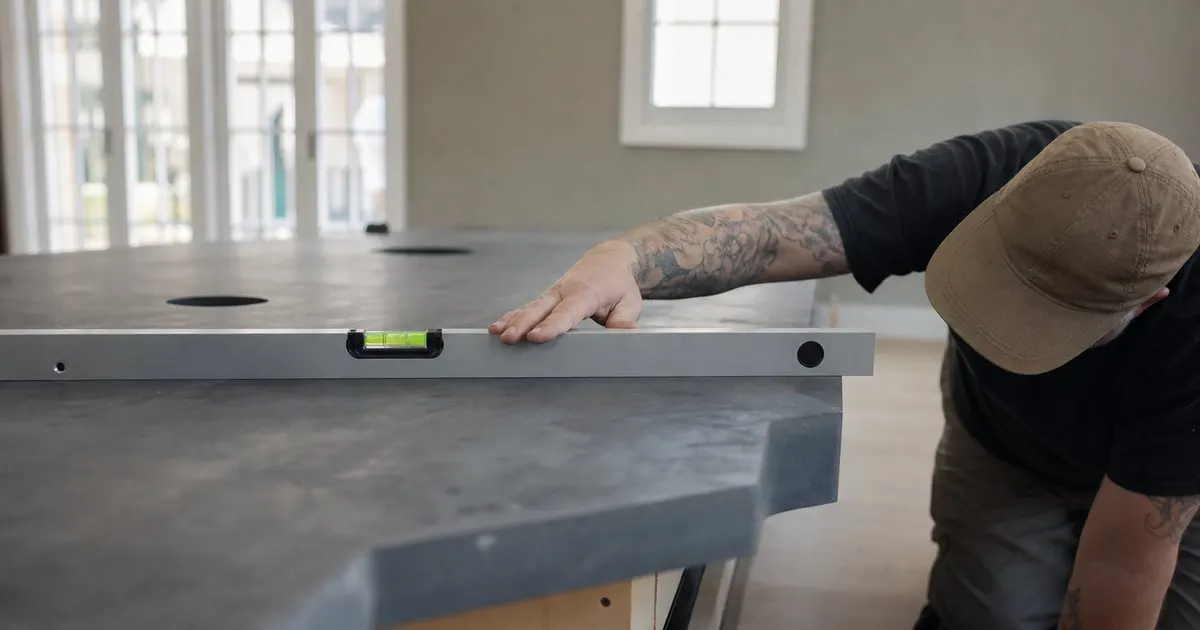
What slate thickness truly matters when buying a premium billiard table for home?
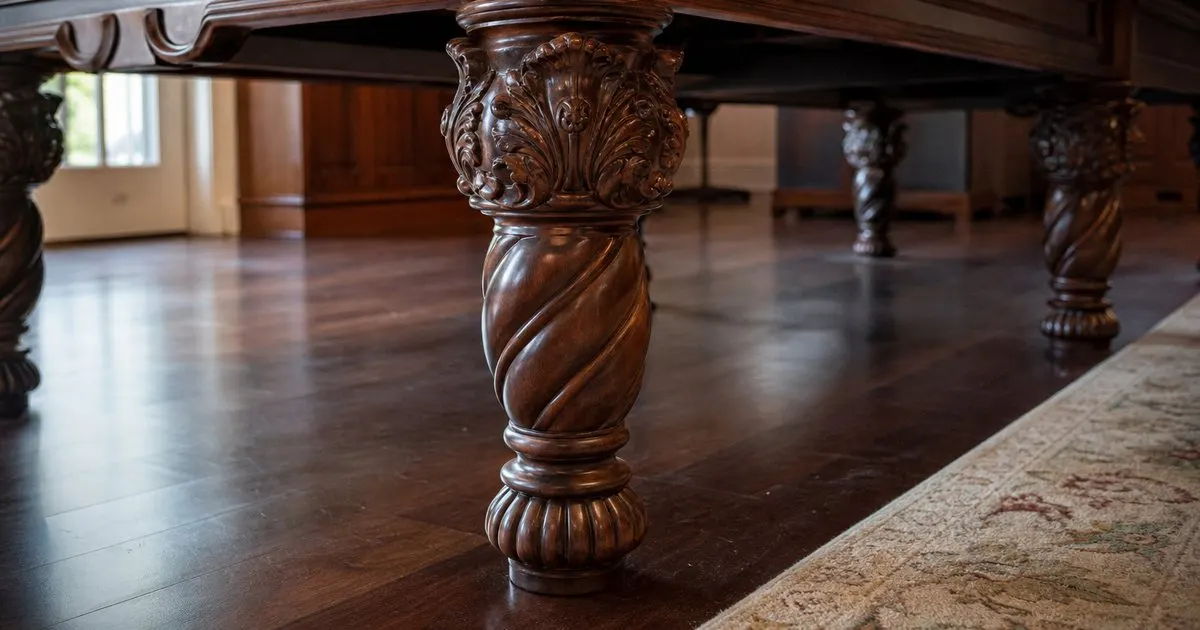
Which hardwoods age most gracefully in a fine heirloom quality billiard table?
Get the complete heirloom pool and billiard tables guide
Our full buying guide, the price guide, and new research as we publish it. One email, no spam, unsubscribe any time.